The Seven Pillars of Receiver Play
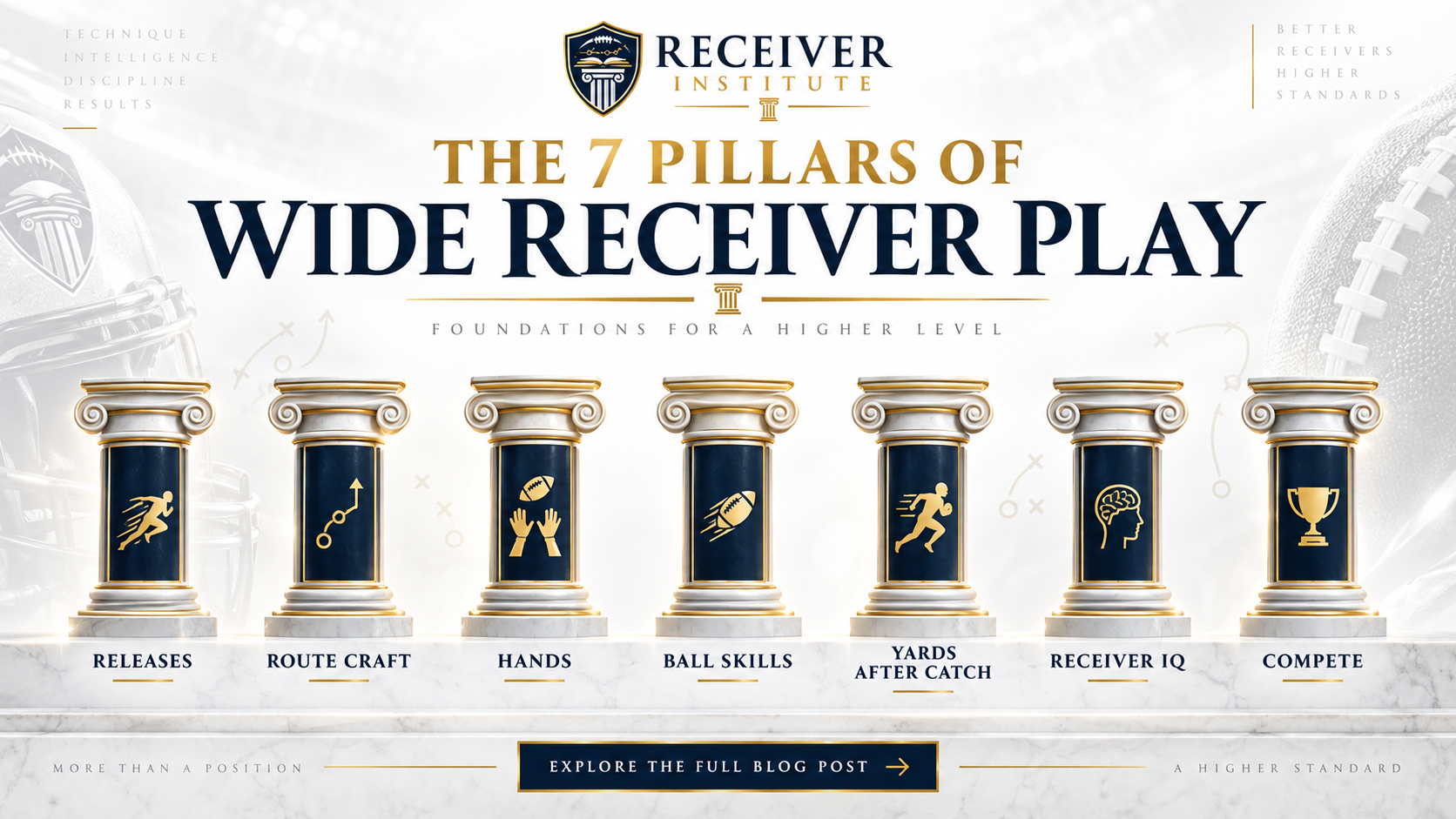
A great receiver can make football look simple.
Beat the defender. Get open. Catch the ball. Make something happen.
But anyone who has played the position knows how much lives inside those few seconds.
A receiver has to win before the ball is thrown. He has to understand leverage, manipulate defenders, create separation, adjust to the football, finish the catch and become a runner. And sometimes, his biggest contribution to a play comes without ever touching the ball.
That is why Receiver Institute looks at the position through Seven Pillars of Receiver Play:
Releases. Route Craft. Hands. Ball Skills. Yards After Catch. Receiver IQ. Compete.
They aren't meant to describe one particular style of receiver. A 5-foot-9 slot receiver and a 6-foot-4 boundary target may win in completely different ways.
The Seven Pillars describe the skills that allow both of them to win.
Together, they create a common language for understanding, teaching and celebrating the receiver position.
01 — Releases
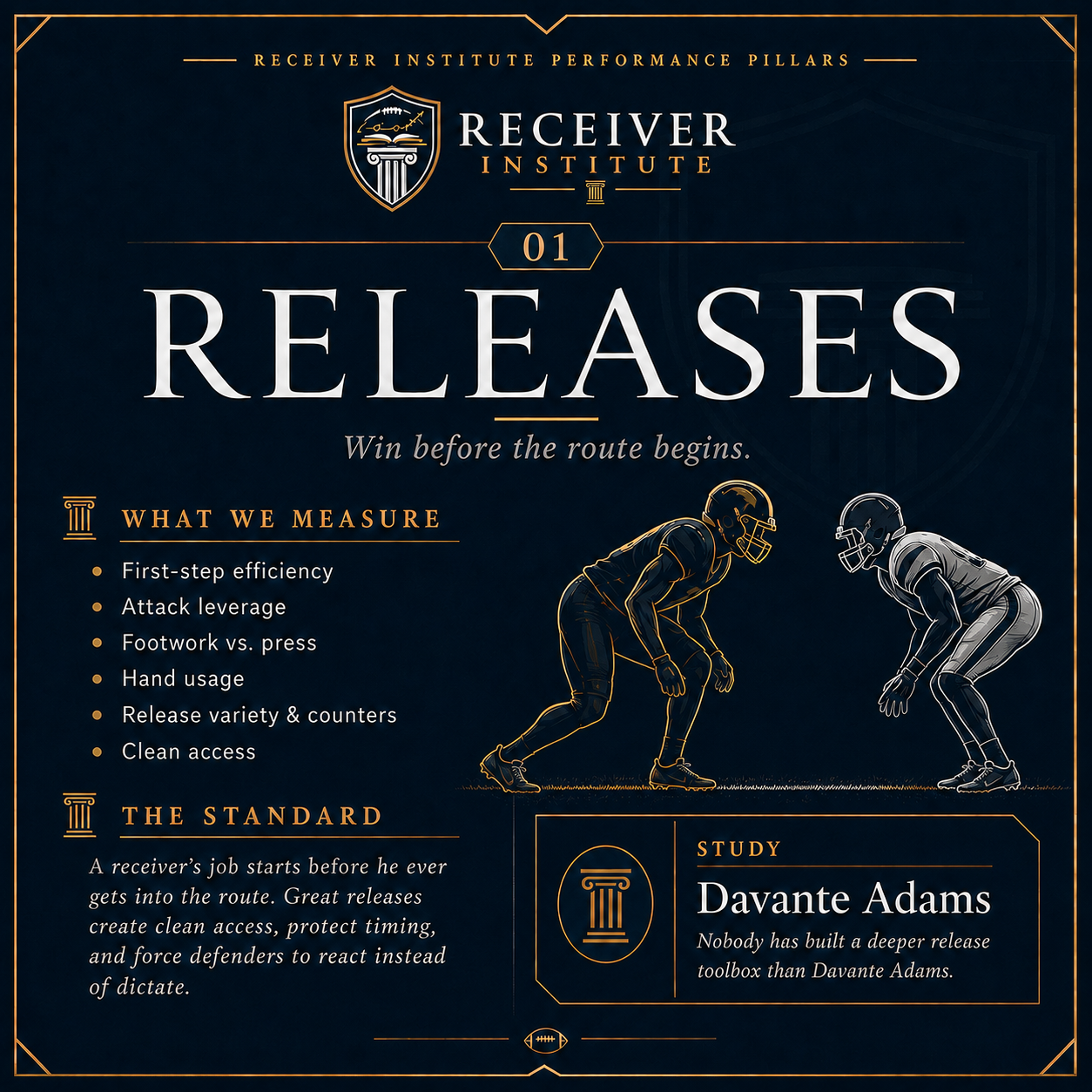
Before a receiver can run the route, he has to earn the right to run it.
Against press coverage, the first few steps after the snap can determine the entire play. The defender is trying to disrupt timing, control the receiver's path and force the quarterback to hold the football.
The receiver's job is to prevent that from happening.
A great release isn't simply about being fast off the line. It requires understanding leverage, manipulating the defender's hips, protecting space and knowing when to use speed, patience, physicality or deception.
Some receivers win with explosive footwork. Others win with hesitation. Some use their hands exceptionally well. The best have enough answers that a defensive back can't consistently predict what's coming.
And releases matter beyond press coverage.
Even when a defender gives cushion, the receiver is still trying to influence how that defender reacts to the beginning of the route.
The battle for separation starts immediately.
02 — Route Craft
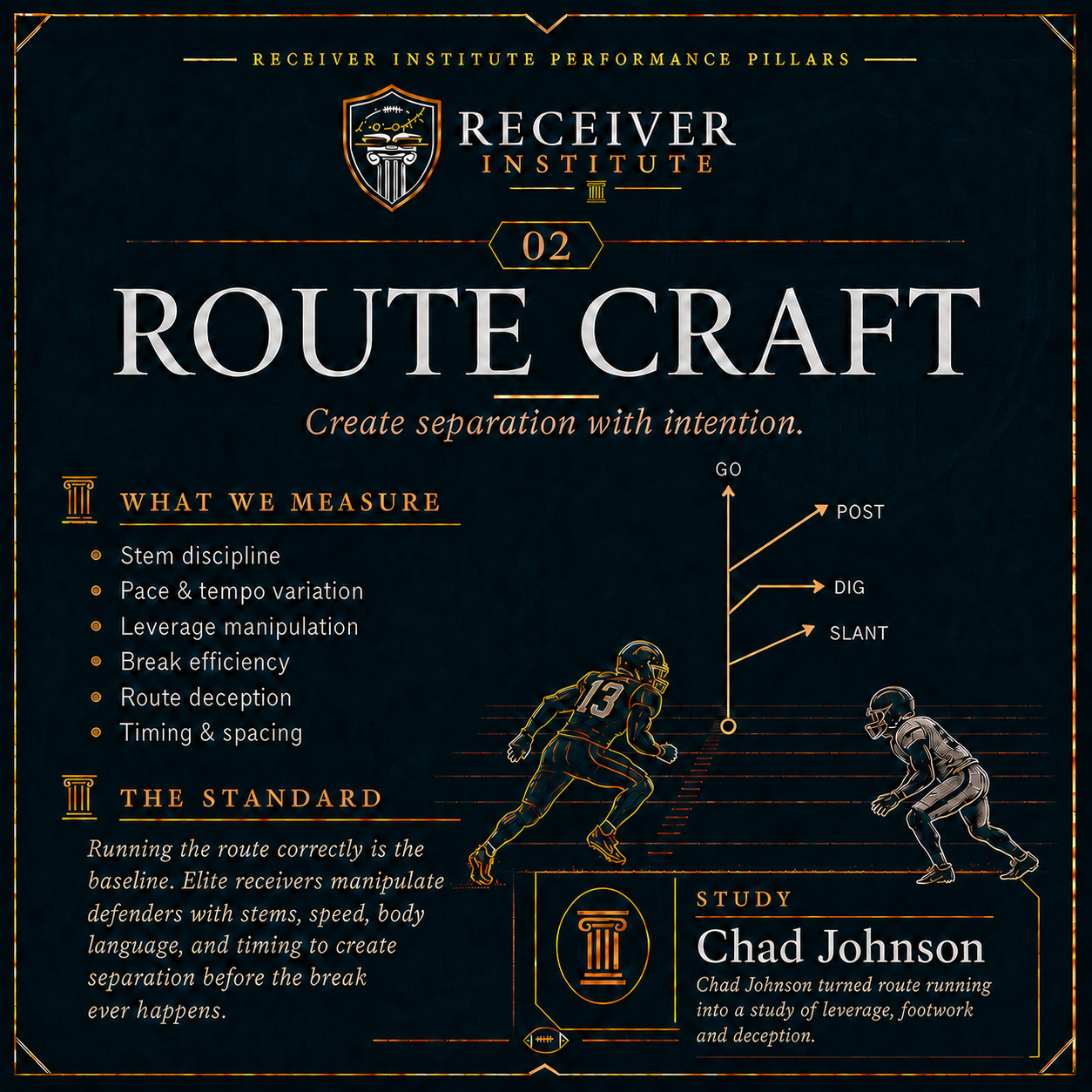
Running a route and running a route well are two very different things.
A route exists on paper as a collection of lines and angles. On the field, it becomes a negotiation between the receiver, the defender and the coverage around them.
Great route runners understand how to create space.
They know when to threaten vertically. They understand stems, leverage and spacing. They can change speeds without announcing what they're doing. They know how to make multiple routes look identical until the moment they aren't.
And perhaps most importantly, they understand that separation isn't always measured in yards.
Sometimes six feet is a win.
Sometimes six inches is enough.
Route craft is the ability to consistently create the throwing window the quarterback needs—while arriving exactly where the offense expects the receiver to be.
It is part technique, part deception and part understanding how defenders think.
03 — Hands
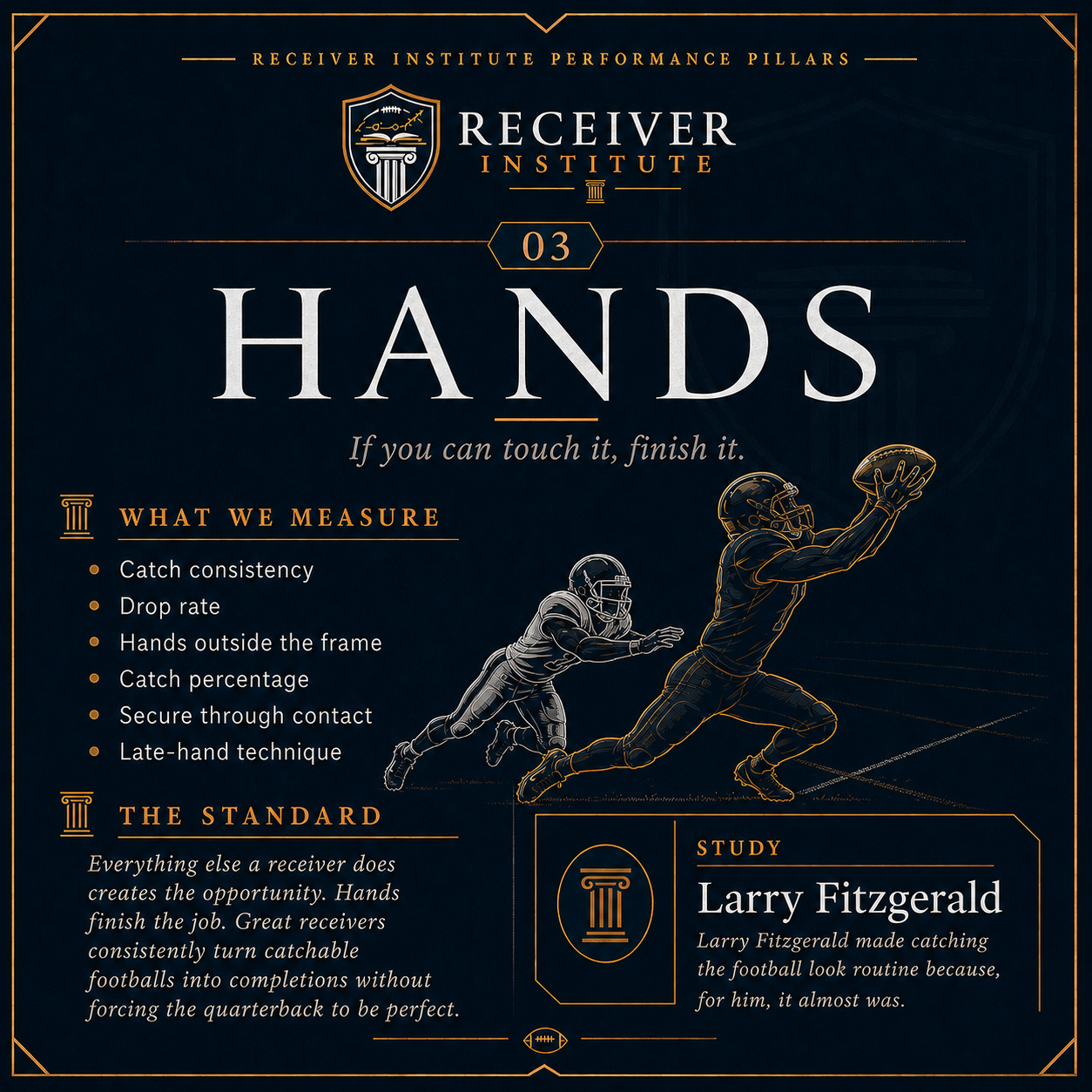
Eventually, all the work has to end with one thing:
Catch the football.
Hands are the foundation of the position.
That means more than simply avoiding drops. Receivers have to catch footballs arriving at different speeds, trajectories and locations. They need to secure the routine throw and finish catches when contact, traffic or poor ball placement make the routine suddenly difficult.
Strong hands allow receivers to catch outside their frame instead of waiting for the football to reach their body.
Late hands prevent defenders from reacting to the ball before it arrives.
Proper technique helps receivers transition from catch to run without wasting movement.
And consistency builds trust.
Quarterbacks need to know that when the ball reaches the receiver, the play isn't over until the receiver decides what happens next.
Spectacular catches are memorable.
Reliable catches build careers.
04 — Ball Skills
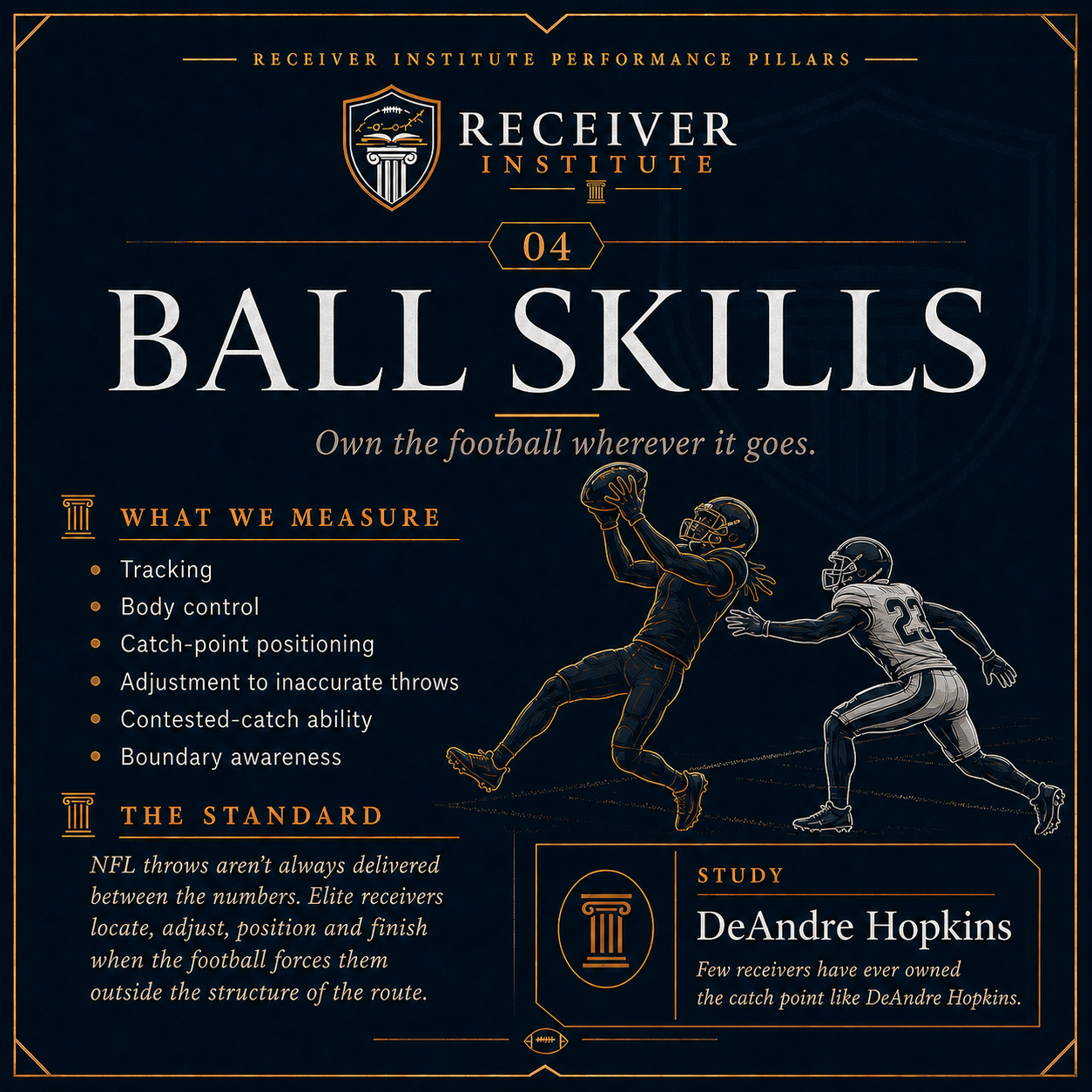
Hands answer one question:
Can you catch it?
Ball skills answer another:
Can you find a way to catch it when everything isn't perfect?
Football rarely arrives exactly where it did during warmups.
Receivers have to locate the ball over either shoulder, track it through traffic, adjust to throws behind them, elevate for high passes and attack footballs before defenders can.
They have to understand when to extend, when to shield, when to high-point and when simply securing the football matters more than making the catch look spectacular.
Ball skills become particularly important on deep throws and contested catches, where the receiver may have only a fraction of a second to locate the ball and adjust his body.
That ability can erase what looks like good defense.
The defender can be in position.
The quarterback can miss slightly.
The receiver can still make the play right.
05 — Yards After Catch
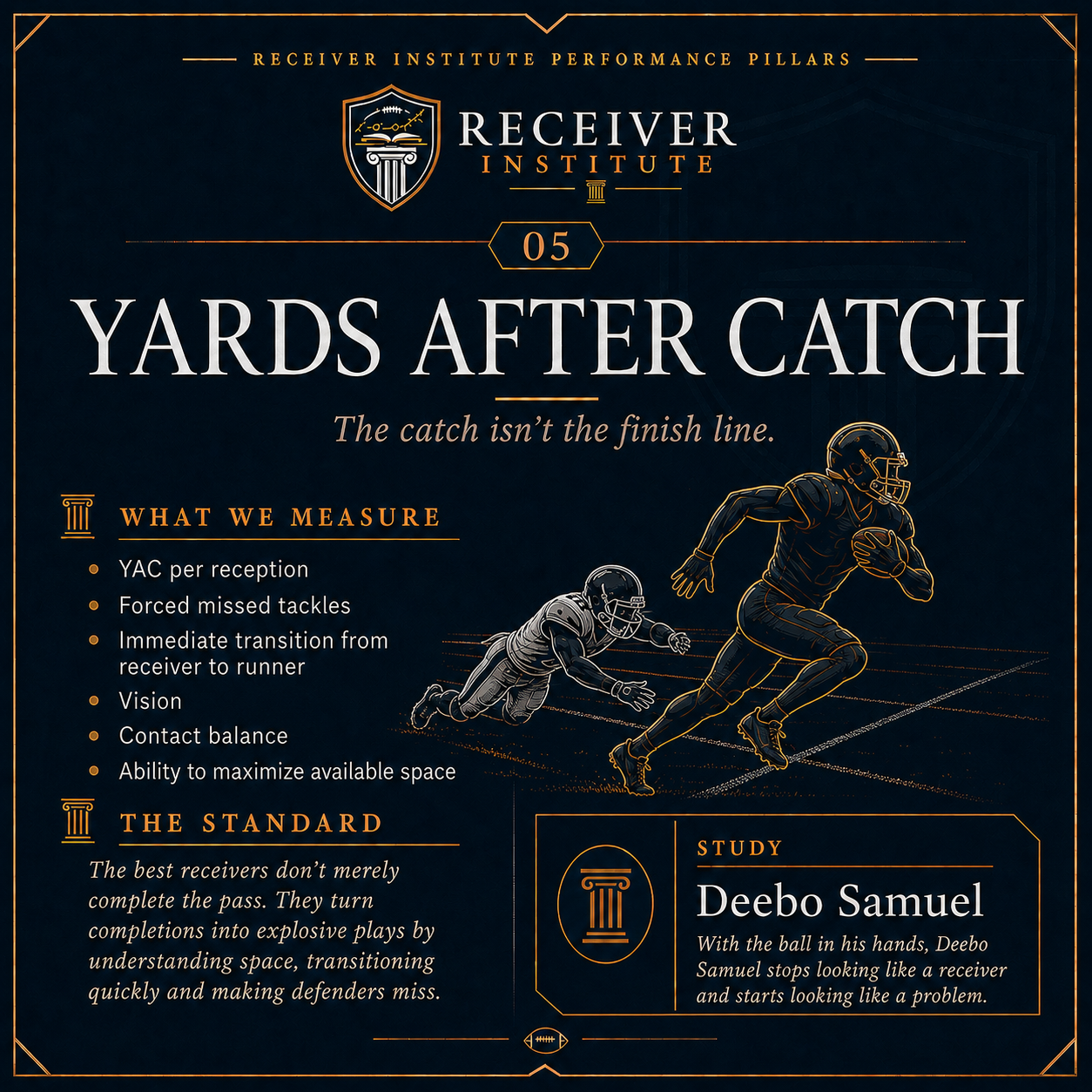
A reception doesn't have to be the end of the play.
For great receivers, it is often the beginning of another one.
Yards After Catch—YAC—is about turning a completed pass into something more.
Sometimes that means pure speed. Sometimes it means breaking a tackle. Sometimes it means making the first defender miss by six inches and immediately accelerating through the space created by that miss.
The best YAC receivers understand angles, pursuit and leverage just like running backs do.
They catch the football ready to move.
They don't waste steps.
They know when to make a defender miss and when to put their foot in the ground and take the available yards.
And they understand that the quickest path to the end zone isn't always a straight line.
Receivers aren't just pass catchers.
Once the ball is secured, they become ball carriers.
06 — Receiver IQ
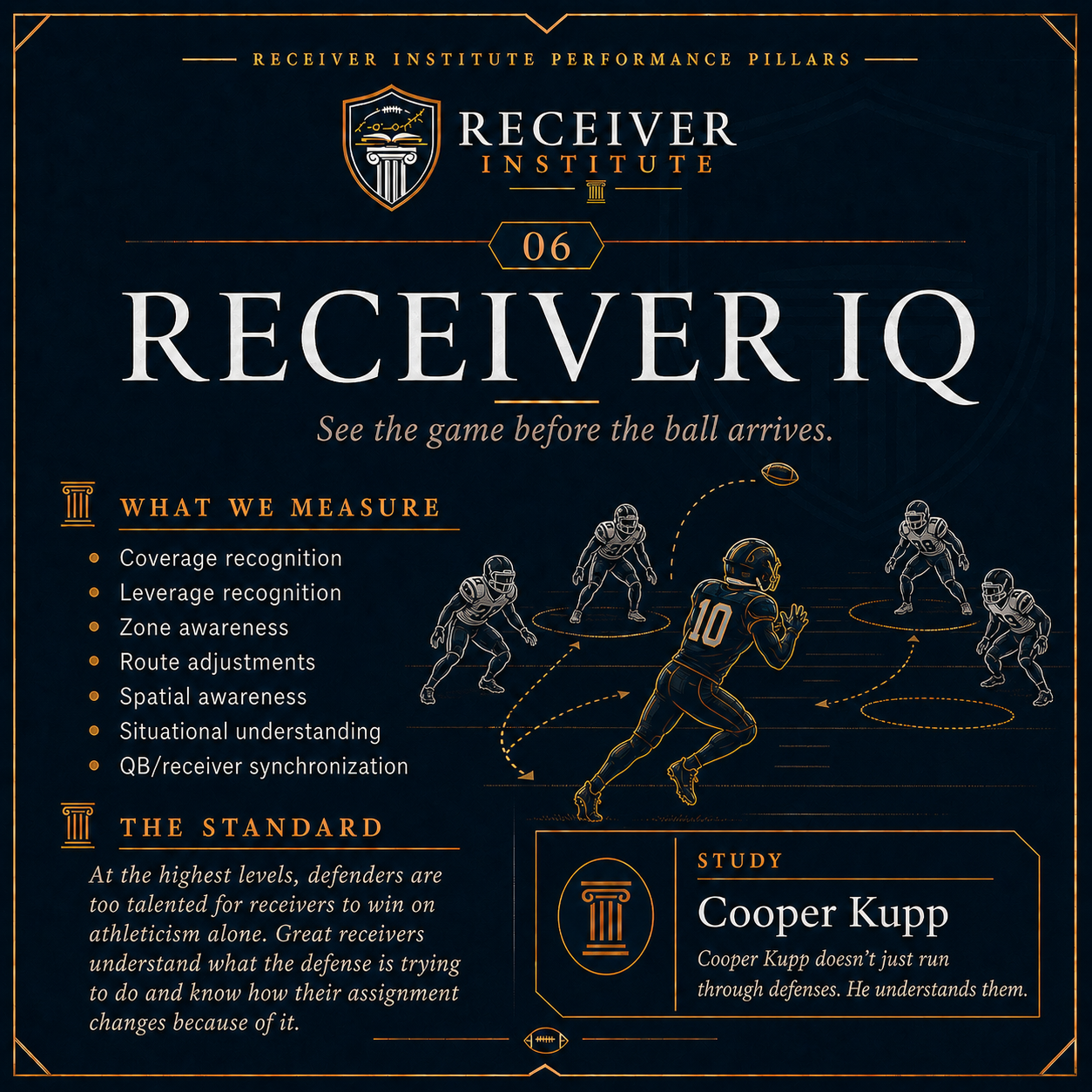
Some of the best receiver play happens before the snap.
Receivers have to understand far more than their own assignment.
What coverage is the defense showing?
Where is the leverage?
Where are the safeties?
Is the corner playing inside or outside?
What changes if the defense rotates after the snap?
How does the route fit with what the other receivers are running?
Where does the quarterback expect the receiver to be against this coverage?
Receiver IQ is the ability to understand the larger picture and make decisions inside it.
It includes recognizing zone windows, adjusting routes, understanding spacing, anticipating pressure and seeing the field through the quarterback's eyes.
The faster the game becomes, the more important this becomes.
Physical talent can get a receiver onto the field.
Understanding what is happening around him helps keep him there.
07 — Compete
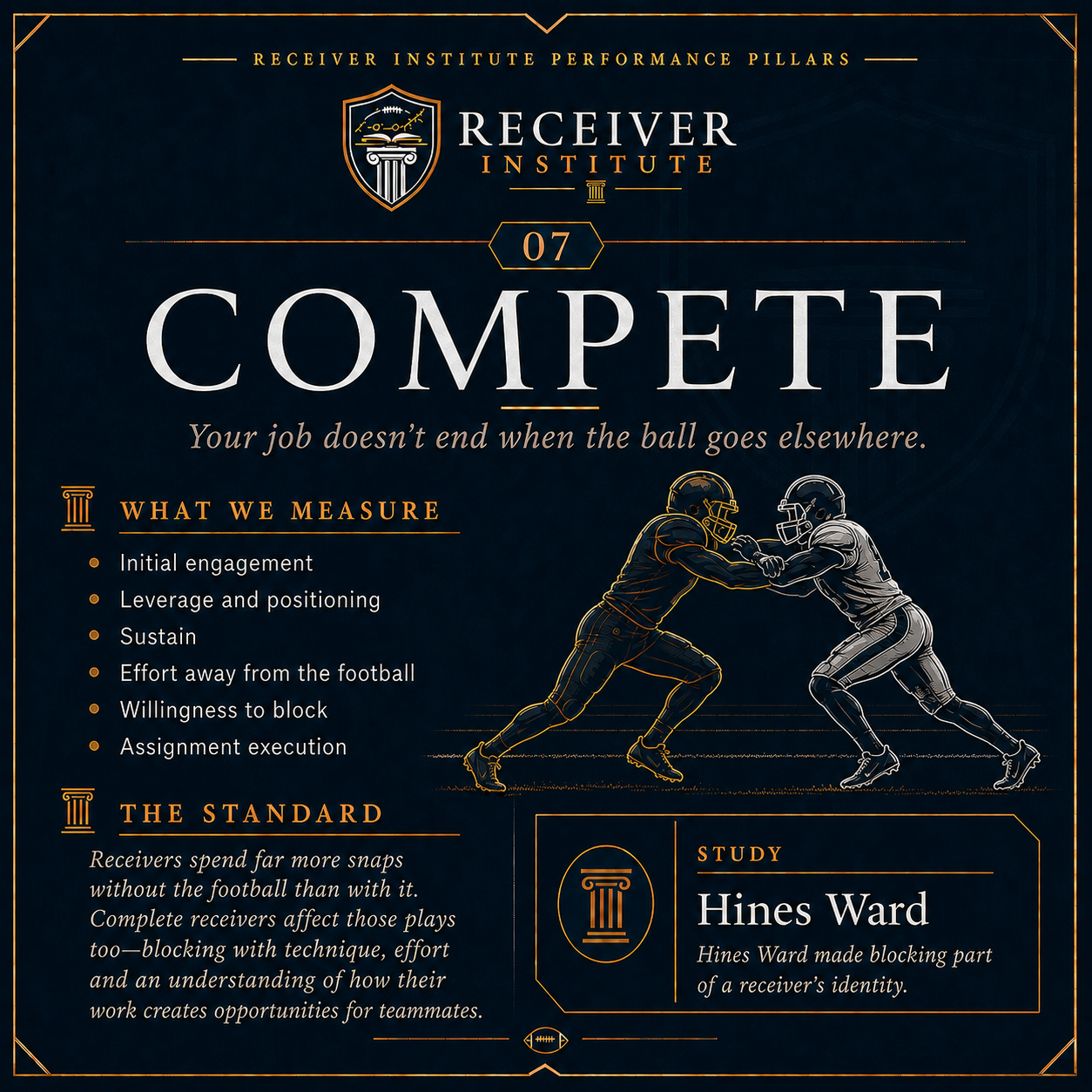
There are plays that don't show up in a receiver's stat line.
A block that springs a teammate for 40 yards.
A route run at full speed even though the ball is designed to go somewhere else.
Fighting through contact instead of allowing a defender to disrupt the timing of the offense.
Chasing down a defender after a turnover.
Finishing a catch knowing a safety is about to arrive.
Those plays belong to the final pillar:
Compete.
Blocking is part of it, but Compete is bigger than blocking.
It is effort, toughness, physicality, discipline and willingness to contribute when there is no reception waiting at the end of the play.
Receivers inevitably spend more snaps without the football than with it.
What they do during those snaps matters.
The great ones don't only compete when the play is designed for them.
They compete because they're on the field.
The Complete Receiver
There is no single formula for greatness at the position.
Some receivers may dominate one or two pillars. Others become dangerous because they have almost no weaknesses across all seven.
Different offenses will value different traits.
Different eras will produce different styles.
Different bodies will create different ways to win.
That's exactly the point.
The Seven Pillars aren't designed to tell receivers how they have to play.
They're designed to help us understand why great receiver play works.
Releases get you into the route.
Route Craft gets you open.
Hands finish the catch.
Ball Skills expand what is catchable.
Yards After Catch extend the play.
Receiver IQ connects everything to the offense.
Compete determines what kind of player you are when the ball isn't coming your way.
Together, they represent how Receiver Institute studies the position—and the standard we want to help advance.
Because being a receiver has never been as simple as catching passes.
And it deserves to be studied that way.